Imagine reading a piece of writing where every sentence feels like a sudden speed bump. You read one thought, slam into a full stop, and then jump to an entirely different thought without any warning. It is exhausting. When writing lacks structural cohesion, even the most brilliant arguments lose their power. That is why mastering the art of the transition is one of the most critical skills you can develop for your academic writing vocabulary. Without these connective bridges, essays sound like a random collection of isolated facts rather than a unified, persuasive argument.
Many students struggle to move smoothly from one piece of evidence to the next when working under tight deadlines. When time runs out, it is common to look for shortcuts, using tools like an essay typer free service at myassignmenthelp to quickly organize initial thoughts and see how paragraphs map out structurally. However, simply generating text isn’t enough to secure a top grade. True writing clarity comes down to how you connect your thoughts manually. If you want to know how to improve essay flow, you have to understand how to bridge the gaps between your sentences and paragraphs. Reliance on automated tools can give you a basic scaffold, but refining the logic requires careful human editing.
Using the right analytical transition words changes the entire reading experience. Instead of forcing your reader to guess how two ideas connect, a well-placed transition word acts like a signpost on a highway. It tells the reader exactly what is coming next—whether you are adding a new point, showing a contrast, or wrapping up a major conclusion. This minor adjustment turns mechanical writing into fluid prose, which is exactly what top-tier evaluators look for when grading school assignments or standardized exams.
Why Logical Flow Matters in Academic Writing
When teachers read your work, they aren’t just looking at your individual facts; they are looking at your logical progression. A high-scoring paper shows a clear chain of thought. Each paragraph should naturally birth the next one. If you drop a new point out of nowhere, you break that chain, and the reader gets confused. When a reader has to stop and re-read a sentence to understand how it relates to the previous one, the persuasive momentum of the essay is lost entirely.
To prevent this, you need to rely on good transition words for college essays that demonstrate relationships between ideas. For instance, if you write a paragraph about the economic causes of a historic war, you shouldn’t just start the next paragraph with a random fact about military strategies. You need a structural bridge. Using words to start a paragraph like furthermore, consequently, or in contrast tells the reader exactly how the new information modifies the old information. It shows that you are control of your analysis, guiding the reader step-by-step through your thought process.
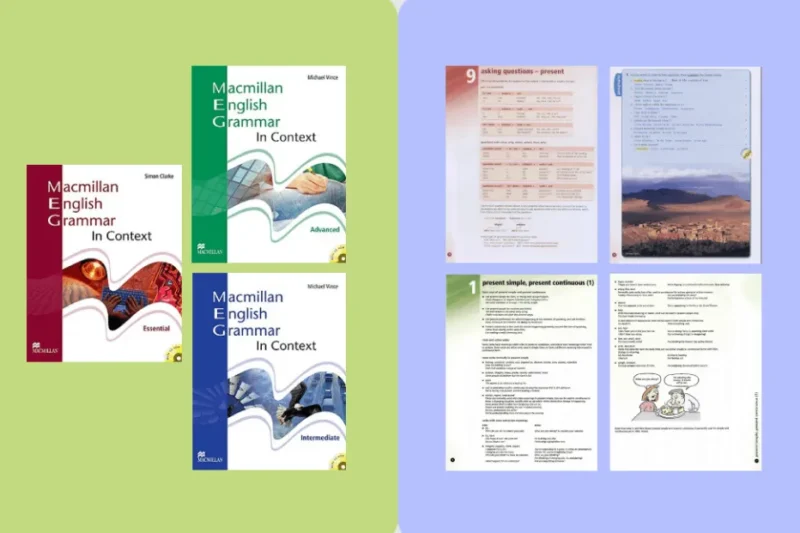
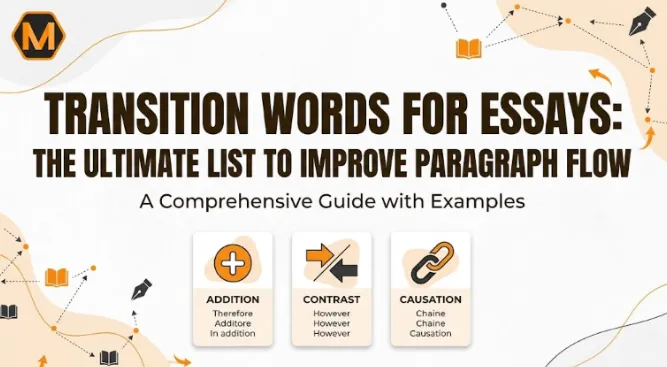
For advanced graduate applications, the structural demands are even higher. If you are aiming for business school, you might collaborate with an expert mba essay writer to ensure your narrative contains zero logical gaps and maintains an elite, professional rhythm. No matter what level of schooling you are currently navigating, the core mechanics of clear prose remain identical. Let’s look at a comprehensive visual layout of how these different word choices serve various academic assignments before diving into the absolute lists.

The Ultimate List of Essay Transition Words
To make your drafting process easier, we have broken these transition words down by their specific function. Do not just pick words at random—choose the one that matches the exact logical relationship you want to create.
1. Words for Adding Information and Building Arguments
Use these when you want to stack evidence or add another supporting point to an existing argument. They signal to the reader that you are expanding on the current thought and providing extra weight to your stance.
- Furthermore: The study proved that the data was flawed; furthermore, it revealed a significant error in previous research.
- In addition: The museum offers free admission to local students. In addition, it hosts weekly educational workshops.
- Moreover: The renewable energy plan is cost-effective. Moreover, it significantly lowers urban carbon emissions.
- Additionally: Online learning offers unmatched flexibility; additionally, it cuts down on daily commuting costs.
- Not only… but also: The policy not only reduces urban waste but also stimulates green job growth across the state.
- Coupled with: Severe economic inflation, coupled with high unemployment rates, forced immediate systemic policy reforms.
- First and foremost: First and foremost, any successful educational reform must address deep infrastructure inequality.
2. Words for Showing Contrast and Contradiction
These are vital when you need to introduce a counterargument, show a limitation, or present a conflicting piece of evidence. They alert the reader to an upcoming twist in the logic, proving that you have weighed multiple viewpoints.
- However: The laboratory results seemed promising. However, subsequent trials failed to replicate the initial data.
- On the other hand: Living in a large city offers endless cultural opportunities. On the other hand, the cost of living can be prohibitive.
- Conversely: High tax rates can sometimes slow short-term economic growth. Conversely, targeted tax cuts can stimulate consumer spending.
- Nevertheless: The team faced severe funding shortages. Nevertheless, they completed the archaeological excavation on schedule.
- Despite this: The weather conditions were brutal. Despite this, the researchers tracked the migration patterns successfully.
- On the contrary: The public assumed the policy would fail. On the contrary, it achieved its targets within three months.
- Albeit: The intervention provided a helpful, albeit temporary, solution to the regional banking crisis.
3. Words for Cause, Effect, and Logical Consequence
Use these phrases when you want to show that one action directly caused another. This is the structural backbone of analytical, scientific, and argumentative writing.
- Consequently: The region experienced a historic drought; consequently, crop yields dropped by forty percent.
- Therefore: The sample size was too small to be conclusive. Therefore, more laboratory testing is required.
- As a result: The company invested heavily in automation. As a result, factory production speeds doubled within six months.
- Thus: The main character isolates himself from society, thus sealing his tragic fate by the final act.
- Accordingly: The school board approved the new safety budget. Accordingly, new security measures will roll out next month.
- Hence: The roads were completely blocked by snow drifts; hence, emergency services could not reach the town.
- For this reason: The original materials degraded rapidly under high temperatures. For this reason, builders switched to reinforced steel panels.
4. Words for Providing Examples and Emphasis
When you drop a statistic or a quote into your essay, use these transitions to smoothly introduce that evidence to your audience without making the insertion feel abrupt.
- For instance: Many native bird species are returning to the area. For instance, blue herons were spotted near the river banks.
- Specifically: The new environmental law targets industrial pollution. Specifically, it limits chemical runoff into local water systems.
- To illustrate: The economy is showing distinct signs of recovery. To illustrate, retail sales climbed by four percent last quarter.
- In particular: The professor praised the structural design of the essay. In particular, she noted the strong thesis statement.
- Notably: Several historical documents were uncovered during renovations, notably a diary detailing daily colonial life.
- Indeed: The initial hypothesis predicted a slight temperature variance; indeed, the final readings confirmed a radical shift.
Comparing Transition Impact on Essay Readability
To see how these choices directly alter the reading experience, take a look at how standard text transforms when you implement a clear transition strategy.
| Without Transitions (Choppy & Disconnected) | With Strategic Transitions (Fluent & Fluent) | Structural Impact Explained |
| The climate is changing. Ocean levels are rising. Coastal cities face regular flooding. | The global climate is changing rapidly. Consequently, ocean levels are rising, which means that coastal cities now face regular flooding. | Connects cause and effect instantly, removing short, robotic sentence structures. |
| The author uses vivid imagery. The plot moves very slowly. The book is hard to finish. | The author uses incredibly vivid imagery. However, the plot moves slowly; as a result, the book can be quite hard to finish. | Balances praise with critique, showing a clear shift in perspective without confusing the reader. |
| Regular exercise boosts energy. It improves sleep quality. You shouldn’t work out right before bed. | Regular exercise boosts daily energy levels and, moreover, improves sleep quality. Nevertheless, you should avoid working out right before bed. | Groups positive benefits together before cleanly pivoting to an important practical warning. |
| The experiment failed. The chemical mixture was contaminated. The temperature settings were wrong. | The experiment failed, primarily because the chemical mixture was contaminated. Additionally, the lab temperature settings were completely wrong. | Clearly isolates multiple contributing factors instead of presenting them as separate, random issues. |
Advanced Paragraph Transitions: Moving Beyond Single Words
While using individual words like however and furthermore works beautifully within paragraphs, connecting two entirely different paragraphs requires a more advanced approach. Relying solely on a single word at the start of a new section can sometimes feel lazy or formulaic.
To build an elite essay flow, you should try writing transition sentences. A transition sentence balances two things: it references the core idea of the paragraph you just finished, and hooks into the idea of the paragraph you are about to start. This keeps the reader locked into your narrative arc without sudden jumps.
Example of a Weak Paragraph Transition:
- End of Paragraph 1: …This proves that high inflation harms consumer spending power.
- Start of Paragraph 2: Furthermore, high interest rates make it difficult for citizens to secure small business loans.
Example of an Advanced Paragraph Transition:
- End of Paragraph 1: …This proves that high inflation harms consumer spending power.
- Start of Paragraph 2: Beyond squeezing daily household budgets through inflation, escalating economic pressures also emerge in the form of high interest rates, which prevent citizens from securing vital small business loans.
Notice how the advanced version acts like a physical bridge. It references the previous topic (household budgets and inflation) before introducing the new topic (interest rates and small business loans) all within one elegant sentence.
How to Avoid Overusing Transition Words
While these words are incredibly powerful, there is a catch: you can easily use too many of them. If you start every single sentence with furthermore, however, or therefore, your writing will quickly sound artificial, stiff, and defensive. It becomes clear to the evaluator that you are trying too hard to make your writing look academic.

The secret to a truly natural paragraph flow is structural variety. Sometimes, you don’t need a formal transition word at all. You can connect your sentences seamlessly by repeating a key concept or utilizing a pronoun that points back to the subject of the previous sentence.

For instance, look at this sequence:
The federal government enacted a new monetary policy in late autumn. This decisive shift instantly stabilized currency markets across the country.
The phrase “This decisive shift” acts as your structural bridge, keeping the prose fluid and distinctly human without relying on a rigid adverb.
When editing your final draft, read your paragraphs out loud. If the transitions feel heavy, forced, or repetitive, prune them back during the revision phase. Your ultimate goal is to guide the reader through your complex ideas naturally, making your arguments clear, engaging, and impossible to ignore.
Frequently Asked Questions
What are transition words and why are they important?
They are bridging phrases that connect your sentences and paragraphs. Using them prevents your writing from sounding choppy and guides the reader smoothly from one argument to the next.
Can you use too many transitions in a single essay?
Yes. Overusing these words makes your prose sound forced, repetitive, and stiff. It is best to vary your sentence structures and use them only when a logical connection needs clarity.
How do you naturally transition between two different paragraphs?
Instead of relying on a single word, write a transition sentence that summarizes the main point of the previous paragraph while introducing the core idea of the upcoming one.
What is the easiest way to fix choppy writing during editing?
Read your draft out loud to hear where the rhythm breaks. Wherever a transition feels abrupt or disconnected, insert an appropriate word to signal contrast, cause, or addition.
About The Author
Ruby Walker is an educator and academic content specialist at myassignmenthelp. She leverages her classroom experience and passion for student development to create insightful, practical learning guides that help students navigate complex coursework and improve their writing mechanics.

Passionate about grammar, language devices, and writing tips, I help writers improve their skills. At boromags.com, I share insights on plural nouns, sentence structure, and clarity. My goal is to make writing easy, engaging, and error-free for everyone.