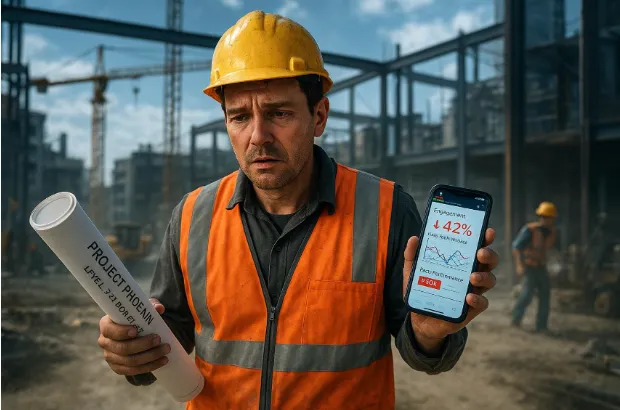
The construction industry supports major infrastructure and drives a lot of economic activity. But it also has marketing problems that can feel as tough as the projects themselves. Many firms struggle to balance jobsite work with marketing work, and to keep up as marketing moves online faster each year. The good news is that these problems can be fixed. A specialized Construction Marketing Agency can step in to close the gap, bringing focused skills and a clear plan that helps construction businesses beat these challenges and grow in a crowded market.
Marketing success in construction is not just about building more. It is about building smarter, reaching the right people, and sharing a clear story about why your company is the right choice. This article explains the biggest marketing problems construction companies face and shows how focused marketing agencies provide a clear plan to solve them-so marketing becomes a real growth tool instead of something done “when there’s time.”
What Are the Biggest Marketing Challenges in the Construction Industry?
Limited In-House Marketing Resources
In many construction companies, marketing is treated like a side task instead of a key business function. That often means there are few in-house marketing resources. People may be stretched across many roles, or they may not have the specific skills needed for modern, data-based marketing.
This makes it hard to keep a consistent brand voice, keep up with new marketing methods, and create strong promotional materials. Many firms invest heavily in doing the work well-materials, equipment, software, and project systems-but spend less effort on getting that work in front of the right buyers. That is where the resource gap causes real problems.
Budget Constraints and Allocations
Budgets are a challenge in almost every industry, and construction is no different. Many firms struggle to set aside enough money for marketing, which often leads to campaigns that are started but never fully supported. When those campaigns underperform, leadership may decide marketing “doesn’t work,” and the cycle repeats.
Across industries, companies spend an average of about 7.7% of revenue on marketing. Construction businesses often spend closer to 4-6%. With a smaller budget, each dollar needs to bring results. That usually calls for a clear plan-something many in-house teams cannot build easily because of limited time and experience. “Free” marketing exists, but it usually costs time, and it can take much longer to earn trust in the market.
Difficulty Reaching Target Audiences
Construction is a wide industry with many specialties, service types, and client groups. Because of that, there is rarely just one target audience. For example, a construction technology company may need to reach end users, decision-makers, and the teams that install or roll out the technology. That means marketing has to speak to different people at the same time.
To do this well, you need strong audience research and clear messages for each group. If you are not sure who you are trying to reach-or what matters most to them-your marketing can feel like shouting into empty space, without landing with anyone.
Standing Out Amidst Competitors
With millions of construction businesses in the U.S. alone (often estimated around 4 million), standing out matters. The problem is that many firms offer similar services and use similar marketing: a website, a project gallery, testimonials, and a trade show booth. When every company looks the same, buyers struggle to see the difference, and price becomes the easy way to choose.
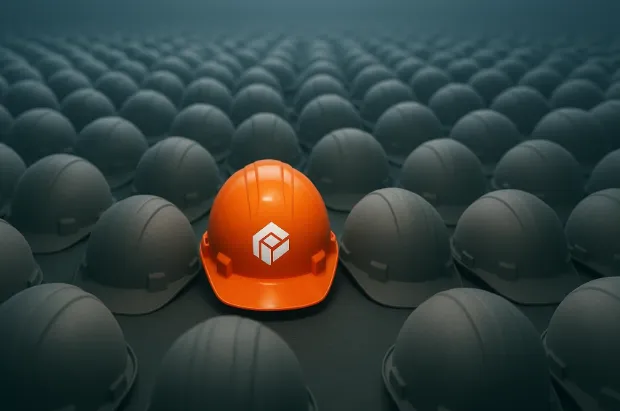
This makes firms blend into a sea of “same.” People end up searching for a service instead of a specific brand. To stand out, companies need to do more than show what they built. They need to show how they think-their approach, process, and the value they bring beyond the basics.
Ineffective Digital Presence and SEO
Construction buying has moved online in a big way. About 96% of people research local businesses online, including construction companies. Still, many contractors treat digital marketing as a low priority, which leads to a weak online presence. That reduces visibility and shrinks the pipeline of leads.
SEO (Search Engine Optimization) is a major part of being found online, but it can feel confusing if you do not work in marketing. Without a strong SEO plan, a great company can end up like a “great building in the middle of nowhere”-well built, but hard to find. Ignoring local SEO and online reviews also means missing one of the strongest places to show up: local search results.
Content Creation: Storytelling That Resonates
Construction teams have a lot of knowledge, but turning that knowledge into content people actually want to read is not easy. Creating steady content-blog posts, articles, case studies-helps attract and keep the right clients, but it takes a lot of time.
Good construction content is more than a list of services. It uses storytelling. Stories are easier to read, help build trust, and show how the company solved real problems for real clients. Without that story angle, content often feels flat and does not hold attention.
Social Media Strategy and Engagement
Construction has long depended on relationships and referrals. Social media can support that, but many firms are unsure how to use it. Common questions include: Which platforms matter? How often should we post? What should we share? Keeping up with platform changes and algorithms can feel messy and confusing.
Even with the challenges, social media is hard to ignore. When done well, it can build stronger connections, bring referrals, and even support SEO. But without a clear plan, many firms post inconsistently and miss chances to engage with the people they want to reach.
Measuring Marketing ROI and Proving Value
One of the most frustrating issues in construction marketing is proving ROI (Return on Investment). Construction teams are used to clear outcomes: a finished building, a completed site, a delivered project. Marketing results can feel less direct and slower to show up.
That makes it harder to defend marketing spend and keep budgets in place. The key is to track results over time and connect marketing actions to leads, calls, and closed work. Without clear tracking and metrics, marketing can look like a guess instead of a business investment.
Managing Product and Project Information
Companies working in the built environment often manage a lot of product and project details: product lines, technical specs, standards, and changing rules and laws. Keeping that information correct, current, and easy for the right people to find can be a large task.
When information is messy or out of date, customers get confused, mistakes happen, and sales can be lost. And because regulations can change quickly, sharing accurate and compliant information is also a legal issue, not just a marketing one. This affects efficiency, decisions, and customer satisfaction.
Industry Perceptions: Low Standards in Marketing
One very honest challenge is the belief that “construction marketing is not very good.” Some research shows that close to 8 out of 10 construction marketers do not rate industry marketing as high quality. Only a small number blame a lack of talent, which suggests the issue is more about how marketing is treated inside companies.
When marketing is viewed as a “necessary evil,” campaigns often lack creativity and do not connect with the right audience. Raising the bar usually requires a shift in mindset-seeing marketing as a serious business tool and being open to new ideas and methods.
How Can a Construction Marketing Agency Solve These Challenges?
Expertise and Outsourced Marketing Teams
A construction-focused marketing agency works like an added part of your team. It brings skills and capacity that many in-house teams do not have. These agencies understand construction terms, buyer types, and long sales cycles, and they also know how to use modern marketing tools.
By outsourcing, construction firms get access to a full team without hiring and training a full department. Agencies can run marketing work efficiently without taking too much time from the client, so company leaders can stay focused on operations while marketing keeps moving.
Optimizing Budgets for Maximum Impact
A major benefit of working with a construction marketing agency is using the marketing budget in a smarter way. Agencies build strategies that set priorities, so money is spent on channels and campaigns most likely to bring visibility and qualified leads.
Digital marketing also makes ROI easier to measure. Agencies can track spend against leads and revenue, then adjust based on results. With the right targeting, smaller firms can compete with larger ones by using tools like Google Ads to reach specific audiences without wasting spend. This turns marketing from a vague cost into something you can measure.
Audience Research and Targeted Campaigns
Construction marketing agencies are strong at audience research. They study the different buyer groups, how they behave, and what problems they are trying to solve. That helps agencies build targeted campaigns that speak directly to decision-makers like architects, developers, facility managers, and end users.
Agencies often balance two goals:
- Brand building to create familiarity and trust over time
- Sales activation to drive actions now, like form fills, calls, and bids
When these work together, a company becomes both well-known and actively contacted by the right prospects.
Brand Differentiation Strategies
In a market where many companies look alike, agencies help define what truly makes a firm different. That might be deep experience in a niche, a focus on green building, strong safety systems, or proven results in a specific project type. Then the agency builds messaging around that difference.
Instead of generic “we do quality work” claims, agencies help shape a brand identity people can remember. A specialized partner like BuiltFor Studio can help construction firms turn that difference into clearer messaging, stronger positioning, and a more recognizable market presence. The goal is not to be different just to be different-it is to build a clear message based on a plan and a real business reason. Over time, this helps clients search for your company by name, not just for a service category.
Improving SEO and Website Performance
Since 96% of people research local businesses online, a strong website and SEO matter. Construction marketing agencies help companies show up in search results and turn website traffic into leads. They break down SEO into simple steps and apply methods that improve rankings.
This often includes:
- Improving Google Business Profiles and map results
- Managing reviews and reputation
- Running targeted paid ads
- Fixing website structure and speed
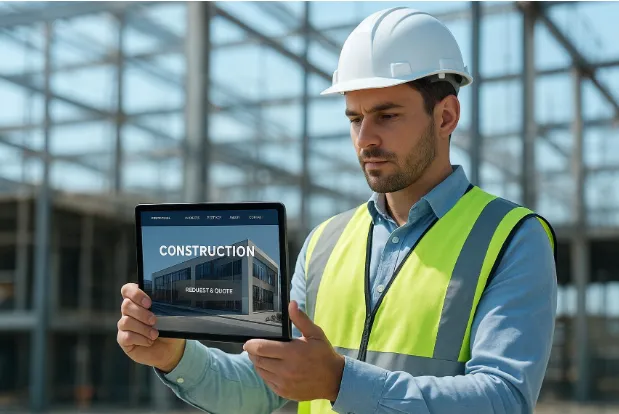
Agencies also treat the website as a sales tool, not an online brochure. They improve design around specific goals, add clear calls to action, use strong visuals, and simplify contact forms (often aiming for fewer than five fields) to improve conversion rates. Website analytics then guide ongoing improvements.
Developing Compelling Content That Converts
Construction marketing agencies create content that is useful, clear, and built to convert. As an outside partner, they can often spot what is special about a company and explain it in simple terms. They can produce project highlights, case studies, and industry articles that show results and credibility.
The best content focuses on what prospects are searching for, such as:
- Answers to specific project challenges
- Procurement guidance
- Views on new materials or methods
- Updates on market conditions
This kind of content shows expertise in ways a portfolio page cannot. It can also be cost-effective: content marketing is often cited as generating about three times more leads than traditional outbound marketing while costing around 62% less.
Effective Social Media Management
Social media can feel like a lot for construction firms, but agencies help make it clear and manageable. They recommend the right platforms, set posting schedules, and build content plans that drive real engagement. Agencies also track performance data to improve results over time.
When social media is managed well, it supports brand awareness, builds a community, and brings referrals. Agencies help connect social media work to business goals, turning a hard-to-manage task into a useful channel for relationships and leads.
Tracking, Analytics, and Real ROI Measurement
Agencies help make ROI easier to see by using solid tracking and analytics. They track SEO performance, record where each lead comes from, and collect feedback after projects to learn what influenced buyers. They also monitor key website metrics like traffic, page views, and clicks on calls to action.
Below is an example of common metrics agencies track and why they matter:
| Metric | What it tells you |
| Website visitors (monthly) | Overall visibility and reach |
| Traffic sources | Which channels bring leads (SEO, ads, social, referrals) |
| Form fills / calls | How many people take action |
| Conversion rate | How well the site turns visits into inquiries |
| Cost per lead | How efficient paid campaigns are |
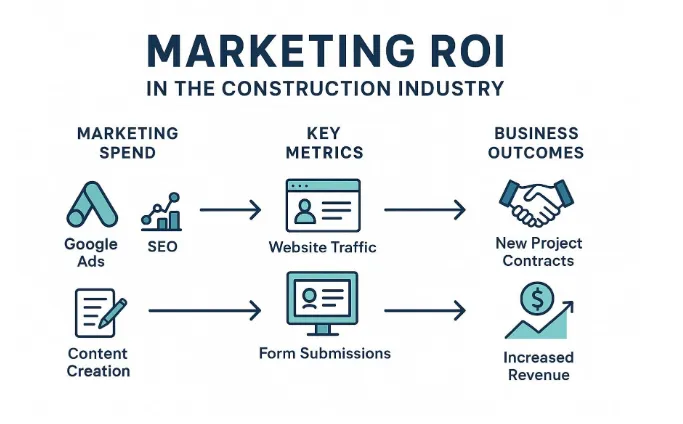
This approach helps justify marketing spend and guides improvements. Agencies are often clear about monthly costs (commonly $500 to $10,000, depending on what is included) and provide regular reporting that connects marketing actions to business outcomes. Mature content programs often report around a 5:1 ROI, compared with about 2:1 for early-stage efforts.
Streamlining Product and Project Communications
For companies managing complex product and project info, agencies help keep marketing connected to product discussions. They use customer feedback to shape the information buyers actually need. This keeps specs, standards, and compliance details current and easy to share.
Cleaner communication reduces confusion, helps prevent lost sales, and can improve supply chain efficiency. Agencies can also support product roadmaps based on real customer needs, helping the company act faster and stay competitive.
Elevating Marketing Standards Within the Industry
A key role of a construction marketing agency is raising the quality of marketing work. By bringing new ideas, modern methods, and data-driven planning, agencies help shift marketing from “something we have to do” into a core driver of growth.
They build marketing plans based on proven methods, add creative thinking to shape a clear brand, and support authority building and thought leadership. This helps firms stand out and build trust. For example, the Edelman-LinkedIn B2B Thought Leadership Impact Study reports that 73% of decision-makers trust organizations more when they show thought leadership, and 60% are willing to pay premium prices for those services.
Choosing the Right Agency Partnership for Long-Term Growth
Evaluating Agency Experience in Construction
To pick the right marketing agency, choose one that truly understands construction. It is not enough to be good at general marketing. The agency should understand long sales cycles, regulations, and the many stakeholders involved in built-environment projects. Look for B2B experience in construction, not just consumer campaigns.
Check case studies, testimonials, and portfolio examples. Focus on proof that they have helped contractors, suppliers, or construction service firms reach real goals. An agency with relevant experience can build stronger campaigns faster and avoid the learning curve of a general agency.
Questions to Ask Before Hiring
Before you hire an agency, ask questions that show how they think and how they work. Ask how they find your company’s values and turn them into a clear story. A strong question is: “How do you help us explain our ‘why’?” That shows whether they can handle real storytelling.
Also ask about key areas like:
- Website strategy: What makes a construction website “good” beyond how it looks?
- SEO plan: How will they improve rankings and local visibility?
- Content: What will they publish, and who is it for?
- Social media: Which platforms and what posting plan?
- ROI reporting: What KPIs will they track, and how often will they report?
The answers should be clear, backed by data, and connected to how construction buyers actually make decisions.
Setting Measurable Expectations and KPIs
A strong agency partnership starts with clear goals and KPIs. Work with the agency to set targets and timelines. For lead generation, KPIs often include lead volume, cost per lead, and conversion rates, reviewed over set periods (like 3, 6, or 12 months).
For authority building and thought leadership, the timeline is different. Paid ads may bring leads in days, but building a book, a speaking profile, or a known expert reputation can take months or years. The tradeoff is that authority building keeps paying off over time, while paid ads stop working as soon as you stop paying. KPIs for authority building may include speaking invites, trade publication mentions, and inbound outreach from partners who already trust your expertise.
The construction industry is projected to reach $15.7 trillion by 2025, and the global building sector is expected to grow to $19.59 trillion by 2032. With that growth comes more competition and more digital buying behavior. Old marketing methods on their own are no longer enough. The firms gaining the most from this growth see marketing as more than “getting the next job.” They use it to build a brand, build trust, and build a business that lasts.
Companies that do not update their marketing risk falling behind and fighting over the same low-margin work. Working with a construction-focused marketing agency is no longer just a smart option-it is becoming a key step for companies that want to lead. These agencies do more than fix short-term problems. They bring clear direction, the right skills, and consistent support to help firms build a lasting advantage. With stronger digital marketing, clearer storytelling, and authority building, construction companies can move past simply showing what they built and start showing how they think-so they can charge more, win better work, and hold a stronger market position for years to come.

Passionate about grammar, language devices, and writing tips, I help writers improve their skills. At boromags.com, I share insights on plural nouns, sentence structure, and clarity. My goal is to make writing easy, engaging, and error-free for everyone.